DMX SoundGuard™ – Frequently Asked Questions
Understanding DMX SoundGuard™
What is DMX SoundGuard™?
DMX SoundGuard™ is a premium flooring underlayment engineered to reduce noise, improve underfoot comfort, and help retain warmth in finished floors. Its advanced tri-layer construction delivers sound insulation, thermal performance, and added durability, contributing to a quieter and more comfortable living space.
What types of flooring can DMX SoundGuard™ be used under?
DMX SoundGuard™ is suitable for use beneath:
● Vinyl
● Laminate
● Engineered hardwood
● Solid hardwood
How does DMX SoundGuard™ reduce noise?
DMX SoundGuard™ uses a purpose-built tri-layer system consisting of closed-cell foam, a high-density HDPE plastic core, and a heat-reflective layer. This construction is designed to absorb impact noise, such as footsteps, while maintaining comfort and warmth underfoot.
Does DMX SoundGuard™ tear or rip like other flat foam underlayments?
No. DMX SoundGuard™ features a 12-thou HDPE plastic core that provides commercial-grade puncture and tear resistance. This added durability helps protect the underlayment both during installation, when most damage typically occurs, and throughout the life of the floor.
Does DMX SoundGuard™ help keep floors warmer?
Yes. The integrated aluminum foil layer reflects radiant heat back toward the living space, helping floors feel warmer and more comfortable underfoot.
If my flooring covers the aluminum layer, how does DMX SoundGuard™
still reflect heat?
As heat travels downward through the floor assembly, the aluminum layer reflects radiant heat back toward the living space. Radiant heat can pass through flooring materials, allowing the reflective layer to remain effective even when fully covered.
How much does DMX SoundGuard™ raise floor height?
DMX SoundGuard™ is only 1 mm thick, making the added floor height nearly indistinguishable compared to installing flooring without an underlayment.
Installation & Applications
Is DMX SoundGuard™ suitable for basements or slab-on-grade
applications?
No. DMX SoundGuard™ is not recommended for basements or slab-on-grade installations.
Its low-profile design does not provide the airflow required to manage moisture vapor rising through concrete slabs. Installing it in these environments may trap moisture, which can lead to mold growth and compromise the living space.
For moisture-prone applications, we strongly recommend DMX 1-Step 2.0™, which is specifically engineered to manage subfloor moisture.
How is DMX SoundGuard™ different from DMX 1-Step 2.0™?
DMX SoundGuard™ is designed for condos and upper-level installations where noise reduction, warmth, and underfoot comfort are the primary priorities.
DMX 1-Step 2.0™ is designed for basements and concrete floors and incorporates an air-gap system that allows moisture vapor to dissipate, helping prevent mold and mildew.
Where can DMX SoundGuard™ be installed?
DMX SoundGuard™ is ideal for:
● Condos and apartments
● Upper levels of homes
● Home offices or any space where sound reduction is important
Does DMX SoundGuard™ include everything needed for installation?
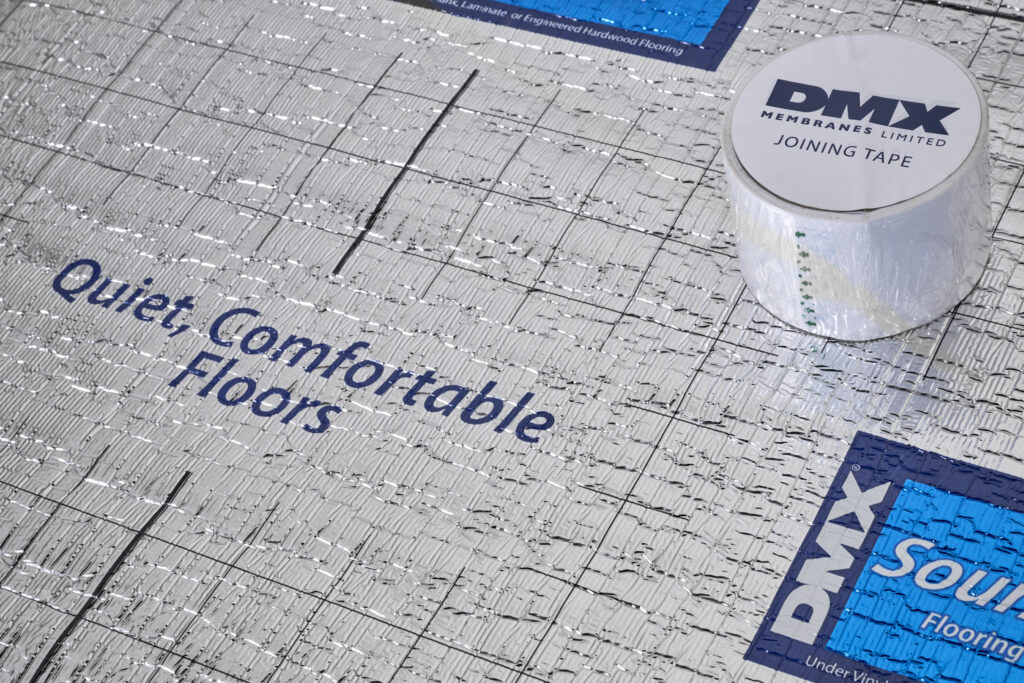
Yes. Every roll of DMX SoundGuard™ includes a FREE roll of DMX Joining Tape, allowing seams to be properly sealed without additional cost.
What happens if I run out of tape?
Each roll includes a generous amount of DMX Joining Tape. If additional tape is required, a standard sheathing tape from your local hardware store is acceptable.
Do I still need DMX SoundGuard™ if my flooring already has an attached
underpad?
If your floor covering includes an attached underpad, use of an additional underlayment is optional and should be based on your specific goals. However, if maximizing sound reduction, warmth, and underfoot comfort is important, DMX SoundGuard™ can still be used in conjunction with attached-pad flooring.
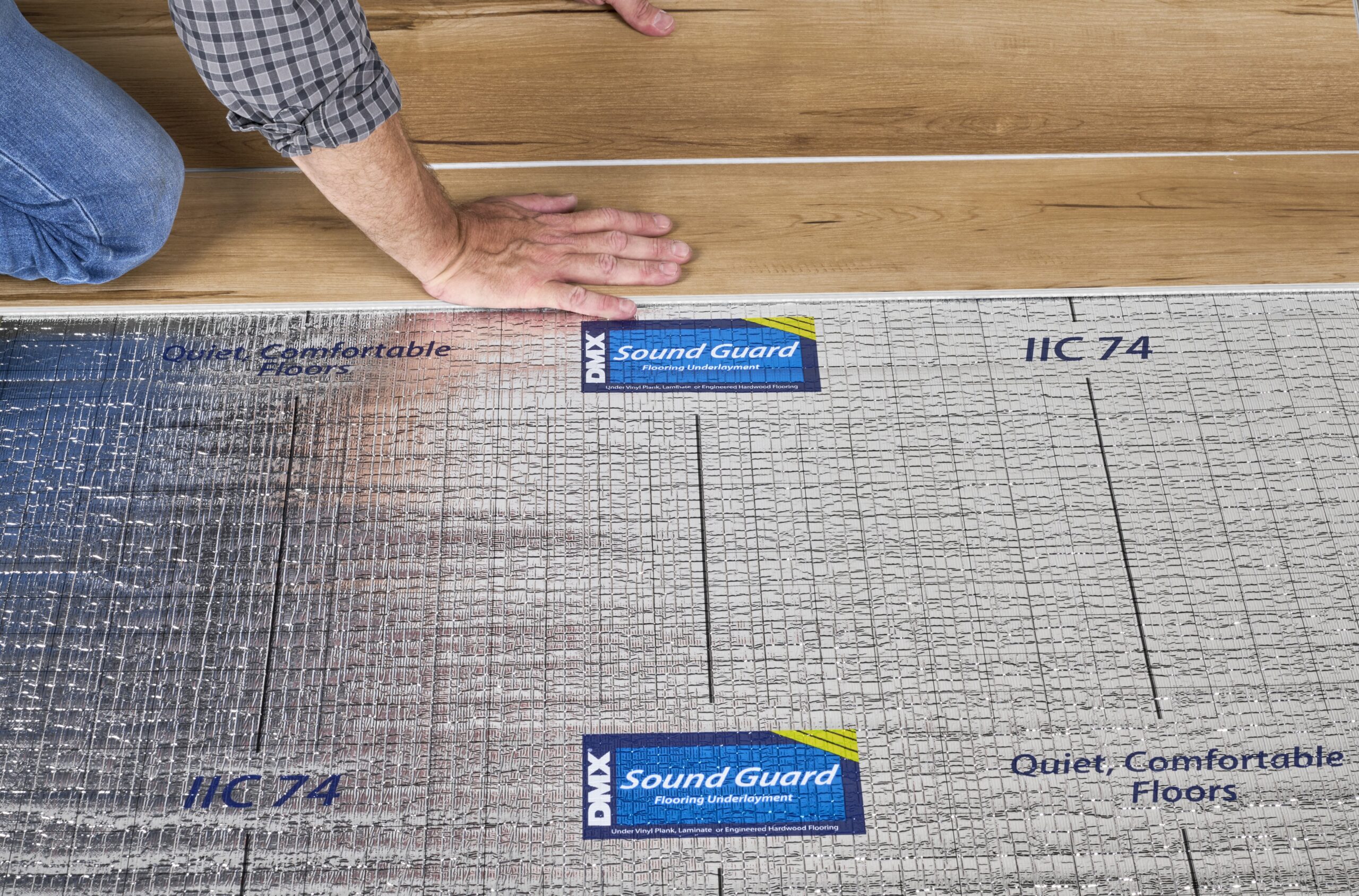
Which side of DMX SoundGuard™ faces up
Install DMX SoundGuard™ with:
● The white side facing the subfloor
● The aluminum foil side facing the flooring
Should DMX SoundGuard™ be installed in the same direction as the
flooring?
To minimize joint overlap, we recommend installing DMX SoundGuard™ perpendicular to the direction of the flooring.
Example: If flooring runs north–south, install SoundGuard™ east–west.
Can I double-stack DMX SoundGuard™ to increase sound reduction?
No. Double stacking is not recommended. If additional sound reduction is required, consider a floor covering with a manufacturer-approved attached pad designed specifically for that purpose.
Performance & Testing
What is IIC and why is it important?
IIC (Impact Insulation Class) measures how effectively a floor assembly reduces impact noise such as footsteps or dropped objects. A higher IIC rating means less noise transfer to the room below.
DMX SoundGuard™ has an IIC rating of 74, which is considered very high for residential applications.
What if my condo board requires more than just the IIC rating shown on
the packaging?
Under the “Test Results” tab on our website, you can access third-party testing data for DMX SoundGuard™ to verify performance claims and satisfy condominium requirements.
Compatibility & Other Uses
Can I use DMX Easy Shims™ with DMX SoundGuard™?
No. DMX Easy Shims™ are only compatible with DMX 1-Step 2.0™. DMX SoundGuard™ is a flat underlayment and does not have the required profile to accommodate shims.
Can I use radiant floor heating with DMX SoundGuard™?
DMX SoundGuard™ is often used as a cost-effective alternative to radiant heating. If radiant floor heating is planned, compatibility should be confirmed directly with the radiant heating manufacturer, as DMX does not test SoundGuard™ with these systems.
What can I do with leftover DMX SoundGuard™?
Unused material can be repurposed in several ways, including:
● Under area rugs
● Inside closets or mudrooms
● Cold storage rooms
What if I want to change my flooring in the future?
If DMX SoundGuard™ was installed according to the Installation Guidelines, it can typically remain in place. Before installing new flooring, ensure the subfloor remains level and structurally sound, as minor changes can occur over time.
General Information
Where can I purchase DMX SoundGuard™?
● Canada: Home Depot Canada
● United States: Home Depot (online only)
Where is DMX SoundGuard™ made?
DMX SoundGuard™ is proudly made in Canada